Deep Compliance: Audit Standards and Practice for CADPA Age Ratings
While the Age Rating Suggestion issued by the China Audio-video and Digital Publishing Association (CADPA) is technically a “group standard,” the National Press and Publication Administration (NPPA) enforces it as a mandatory administrative requirement. Since 2021, the Age Rating Suggestion has evolved from a simple UI guideline into a core anchor for substantive Game Content Review.
1. Distinction: “Rating” vs. “Access”
Western systems (ESRB, PEGI) function as Consumer Guidance. A non-governmental body reviews the content, and the market or guardians decide on the purchase. The Chinese system functions as Administrative Access Control.
Common Misconception:
Many Western developers assume: “My game contains violence and mature themes. I will simply select ‘16+‘—matching the Western standard—and retain the content.”
The Legal Reality:
China has no “18+” or “Adult Only” rating. Under the Provisions on the Administration of Online Publishing Services, all games with an ISBN must first comply with a universal legal baseline. Even a “16+” game acts as a subset of legal publications. It cannot contain any content prohibited by the Criminal Law or the Law on the Protection of Minors.
Case Example: Hogwarts Legacy
In the West, Hogwarts Legacy might be rated Teen (12+) or 16+. However, the game features minors engaging in violence (the protagonist is ~15 years old) and the ability to use “Unforgivable Curses” (torture/killing). Consequently, simply labeling it “12+” or “16+” does not make it compliant for the Chinese market. It would likely face rejection due to “violence by minors,” regardless of the chosen tier.
The Age Rating is a subdivision of safe content, not a shelter for restricted material.
2. Substantive Review Boundaries per Tier
During the ISBN review, experts strictly audit the consistency between the declared tier and the actual gameplay content. “Inconsistency in Rating” is a high-frequency cause for revision orders (Feedback).
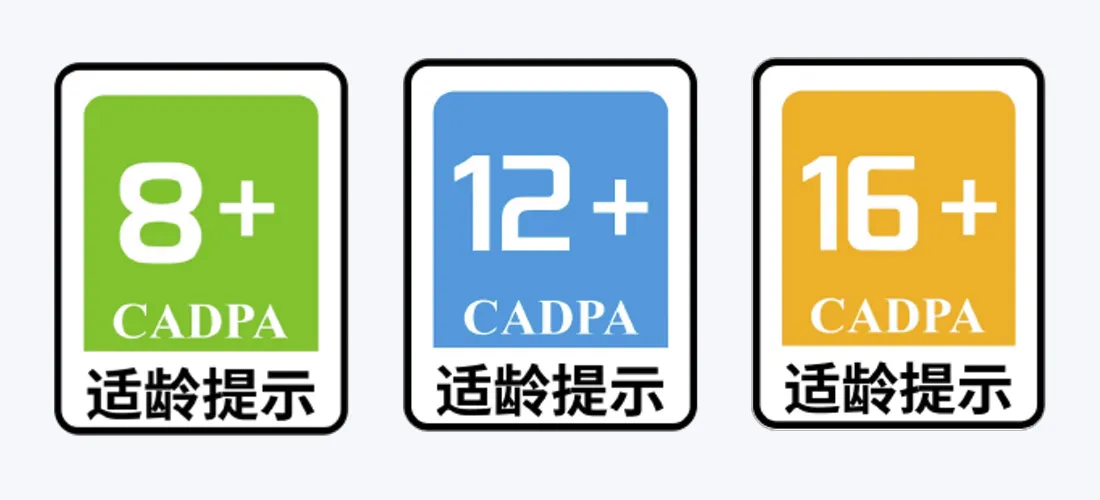
1. 8+ (Green) — Zero Violence & Minimal Social
- Scope: Puzzle, educational, and casual titles.
- Violence Red Line: Strictly prohibits all forms of combat or violence. Even cartoonish aggression directed at humans or living creatures (e.g., throwing snowballs, bottles, or fruit) requires extreme caution and is often rejected.
- Social Restrictions: Stranger social networking is generally prohibited (not just one-on-one). In practice, chat systems should be disabled or restricted to pre-set phrases and emojis.
- Monetization: High-inducement “Gacha” (Loot Box) mechanics are strictly forbidden. High-value transaction features are prohibited.
2. 12+ (Blue) — Stylized Combat & Controlled Social
- Scope: The entry threshold for most MMORPGs, MOBAs, and Card Battle games.
- Violence Standard: Non-realistic combat is permitted. Weapons can be cold steel or sci-fi energy beams. Strict Prohibition: No liquid spatter of any color (including green or black blood). Detailed descriptions of violent acts are discouraged.
- Marriage Systems: Any system labeled “Marriage” is prohibited. Content must not include suggestive kissing or embracing.
3. 16+ (Yellow) — Realistic Combat & Deep Social
- Scope: Realistic shooters, hardcore action games, and deep RPGs.
- Violence Standard: Realistic character proportions and combat animations are allowed. However, the baseline remains: Corpses must vanish immediately (typically within 5 seconds). No dismemberment, decapitation, or torture close-ups.
- Social Depth: Complex social structures are permitted, including Guild Wars and free-text chat (with mandatory keyword filtering).
- Romance Systems: Romantic plotlines are allowed. Constraint: No “Love Triangles” or polyamorous implications.
- Sexual Content: Female character attire must adhere to strict coverage standards (no excessive cleavage or gluteal exposure; no physical jiggle physics).
3. Technical Compliance
Compliance is not just about content; it is about form. The CADPA standard dictates strict technical implementation.
-
Immutability: Developers must use official vector files or pixel-matched bitmaps. It is strictly forbidden to modify the color scheme (e.g., changing 16+ to red) or alter the aspect ratio (stretching/squashing).
-
The Dynamic Loading Risk: Avoid loading the rating icon via server-side resources. The Risk: The government review environment often operates on intranets or unstable connections. If the icon fails to load due to network fluctuation, reviewers will take a screenshot and reject the application for “Missing Age Rating.” The Requirement: The icon must be Hardcoded into the client binary to ensure visibility offline.
-
Interaction Logic: The icon must function as a clickable button.
- Action: Upon clicking, it must display the standardized Health Game Advice and the specific text explanation for that age tier.
- Placement: It must be permanently visible on the Login Screen, Main Lobby, Purchase Interface, and the Official Website homepage.
4. Strategic Advisory
-
Avoid “Low-Spec, High-Report”: Do not attempt to label a simple, child-friendly game as “16+” to avoid “potential review risks.” Reviewers will question the mismatch between the low-risk content and the high-age declaration. The declared identifier must match the actual game content.
-
Avoid “High-Spec, Low-Report”: Do not use cloud-controlled switches to hide mature content (PvP, Guilds) and then file for an “8+” rating to expand the user base. This constitutes Deceptive Filing. If discovered, penalties extend beyond rejection to the “Corporate Blacklist,” resulting in the freezing or delay of all future audits for the company.
-
Localization at the Code Level: During the pre-production phase, assets must be sanitized against the Age Rating Standard. If core gameplay involves “Violent Executions” or “Nudity,” the Chinese branch must refactor the code to remove these features entirely. Simple UI masking is insufficient.

AUTHOR DOSSIER
Boyang Li Attorney at Law
Licensed Chinese attorney. Specializing in the regulatory intersection of Digital Entertainment and Artificial Intelligence.